At the beginning of World War 2 the Admiralty had Morgan Giles Limited on a list of companies capable of carrying out new construction and repair work to naval craft. Just before the outbreak of war a new shed was built on an old site that had been used in Mansfield's time for hauling up trading vessels. This was large enough to take vessels of 100ft. Later in the war the old building at the south end of the yard was pulled down and another large shed erected with an upper floor where smaller boats could be built. The local house 'Misterton' was taken over for offices including the drawing offices.
The first contract for six 16ft trawler lifeboats and four naval cutters came soon after war broke out. Very soon more Admiralty contracts came in, six 35ft motor pinnaces, two slow type motor pinnaces and four 72 ft harbour defence motor launches - HDMLs. The 35ft pinnaces were hard chine boats powered by twin Ford V8 engines. On trials they made 21 to 22 knots. Two of these were finished as sea-plane tenders. The two slow pinnaces had round bilges and were fitted with Kitchen rudders and single Dorman diesel engines. The four HDMLs were fine craft, round bilged and powered by twin 150 HP Gardner diesels. A gun was mounted forward and on trials they achieved 12 knots.
More contracts included assault landing craft, powered by Ford V8 engines and four fast motor pinnaces with twin Perkins V6 diesels. The pinnaces were fine boats with speeds of some 20 knots and no less than fifty of these types were built at the yard.
Five 60ft pinnaces were built for the Royal Navy. These boats were originally designed as torpedo recovery craft and were fitted with a large derrick, but some were used for different purposes. The most important work that came to the yard during the war was an order for eight Vosper type 70 foot Motor Torpedo Boats. They were powered by three Packard 1500 BHP engines. They had two torpedo tubes mounted forward and a power operated gun turret aft. On trials they achieved a speed of 40 knots. The first MTB was ready for trials in 1942 and the last of the eight in February 1944.
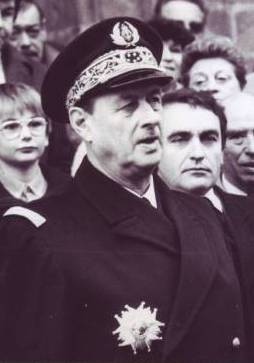
There was a flotilla of MTBs based at Kingswear which also came to the yard for refits. Two of these were Morgan Giles boats and were manned by Free French crews. The 1st Lieutenant on one of them was the son of General de Gaulle.
Throughout the war years the yard carried out refits for Admiralty craft and many RAF Air Sea Rescue launches. The Admiralty installed a new slipway to the South of the big shed. It was the type by which a cradle ran on rails and was worked by a power winch. The slipway was used chiefly by B-type Fairmile Motor Launches and D-type MTBs but also some fishing vessels.
There were other lesser overhauls and refits, an old Brixham trawler called Seaplane was brought to the yard to be converted and fitted out for cable laying with a large winch and roller forward. In 1944 two HDMLs came to the yard to be fitted with a great quantity of top secret equipment, after D-Day they came back to the yard to have it all removed.
The last war contract came for two 61½ foot MFVs. By this time the war was going well and it was planned that if the war ended before completion they would be turned over to the fisheries. Both were sent to Scotland.
Teignmouth was heavily bombed during World War 2 due to the importance of the docks and the Morgan Giles Shipyard. Mostly daylight hit and run raids. The Yard was only affected on one occasion. On Sunday afternoon of 10th January 1943 bombs fell on the adjacent Powderham Terrace and the blast caused damage to the yard. All the office and workshop windows were blown out, telephone and electricity cables were down and the area was full of rubble. Robin Morgan-Giles and his father saw the attack from Shaldonand immediately crossed over on the ferry. Robin recalls how he was stationed by the entrance gates to keep guard over the valuable equipment and stores that were lying about in the road.
Over 100 Admiralty craft were built at the Morgan Giles yard during WW2 and many more were repaired and refitted. For a period over 150 hands were employed to assist the war effort. It is appropriate to pay tribute to the efforts of all the men and women who worked at Morgan Giles during the war years achieving far higher production than could ever have been achieved in peacetime while maintaining a very high standard of workmanship.
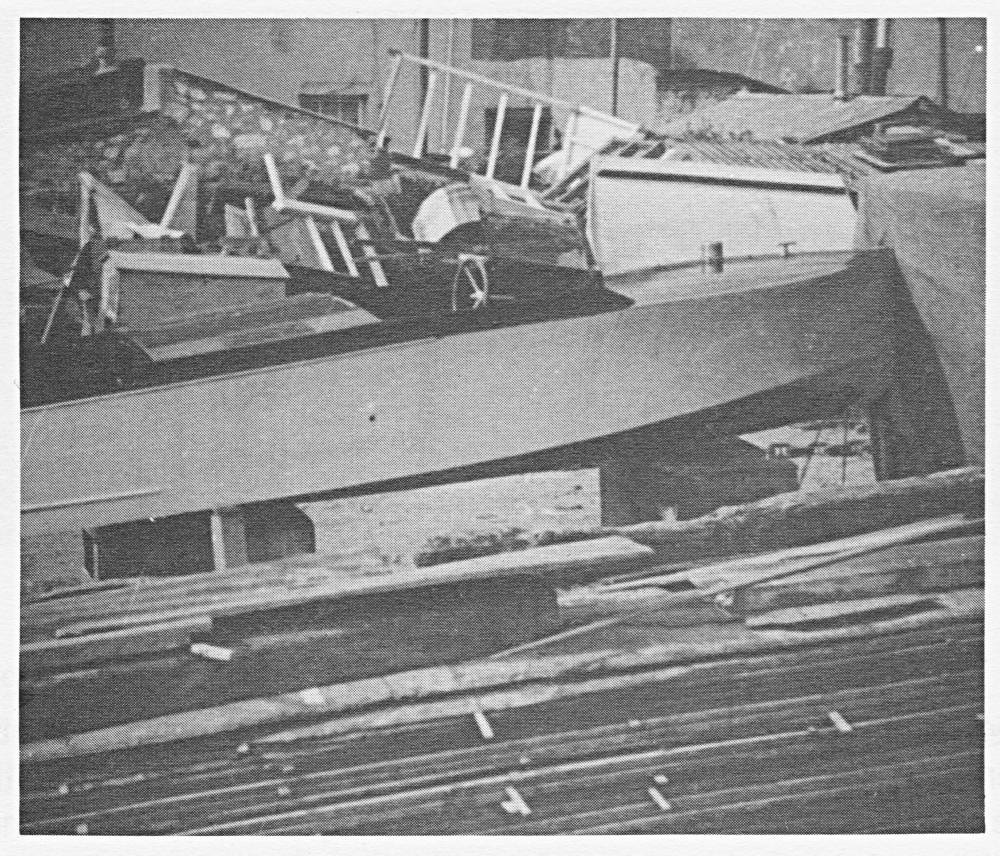 Morgan Giles Shipyard Bomb Damage 1943
Acknowledgement: The Morgan Giles Shipyard. GK Collyer. Monograph 6.Teign Heritage Centre