The Morgan Giles Heritage Project has been created to preserve and promote the Morgan Giles legacy for current and future generations through collections, research and conservation.
JANE SHADDICK is now the co-ordinator of theMorgan Giles Heritage Project. She is the central figure responsible for preserving, managing, & promoting the historical legacy of Frank Morgan Giles and his shipyard.
Key responsibilities include;
Co-ordination; - Overseeing project activities, liaising with contributors, historians, collectors and enthusiasts to support ongoing research and engagement.
Archival stewardship; - Maintaining ownership and care of personal records, documents, photographs, and artefacts relating to Morgan Giles, ensuring their preservation and accessibility for future generations.
Historical documentation; – Organising, cataloguing and interpreting materials to build a coherent and accurate record of the heritage project.
Community engagement; - managing and curating a dedicated Facebook page, connecting with a worldwide network of followers, researchers and maritime heritage enthusiast.
Outreach and communication; - Sharing updates, discoveries and historical insights to raise awareness and encourage collaboration across an international audience.
Her role combines historical expertise, organisational skills, and digital communication to sustain and grow a globally connected heritage initiative.
Francis Charles Morgan-Giles's career as a yacht designer, builder & racer lasted over 60 years. He is considered to be one of our foremost naval architects of his time, especially in relation to the development of the British dinghy and the 6 metre and 8 metre IYRU racing yachts
Jane endeavours to work closely with members of The Teign Heritage Centre (Teignmouth Museum) and their Morgan-Giles website www.morgangilesarchive.org.uk
Contact details.
Facebook – Morgan Giles Heritage JaneShaddick
Email – This email address is being protected from spambots. You need JavaScript enabled to view it.
O n 22 July 2024, 104 Years to the day when Frank Morgan-Giles bought the Teignmouth Shipyard, a blue plaque was unvieled on Leander Court, the block of retirement flats that now stands where the yard was situated.
The plaque acknowledges the designers and builders of racing yachts, dingies,motor cruisers and over 100 Admiralty vessels built in WW2.
The image shows Trevor Jackson who was an apprentice at the yard just after the war unveiling the plaque
Biography of Frank Morgan Giles
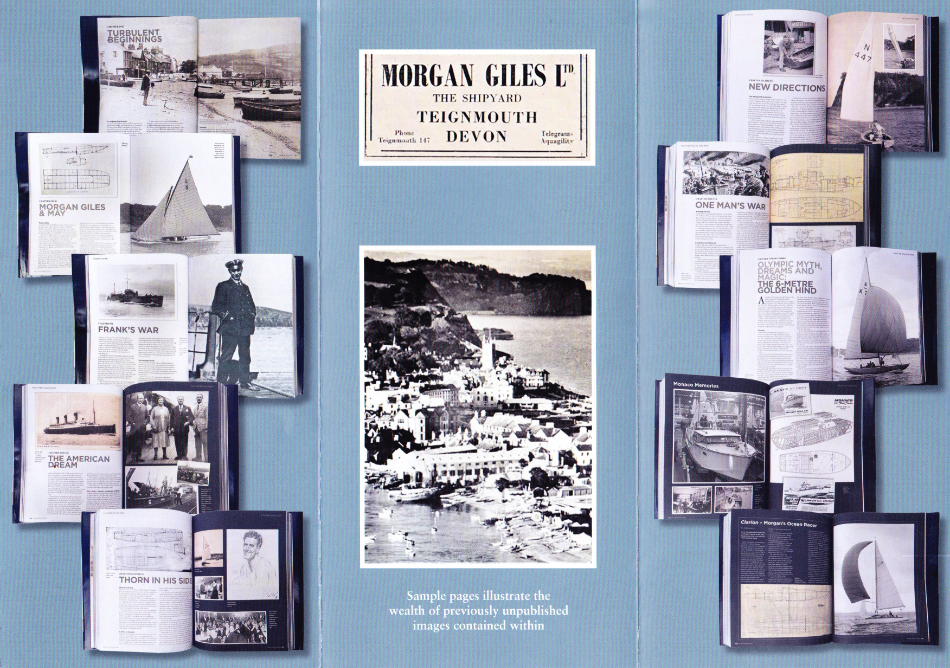
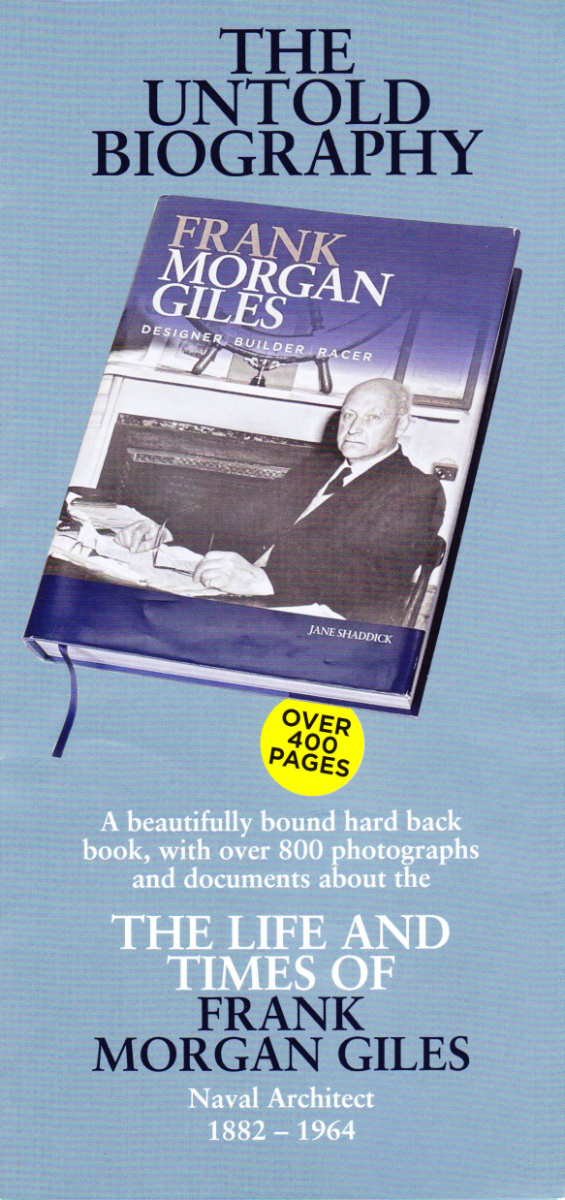 The Biography of Frank Morgan Giles tells the story of Frank from his days founding his first yard in Hammersmith with his partner Harry May, through his years in the yard at Teignmouth. A fascinating story documenting his personal struggles and triumphs using extracts from his private diaries,family letters and shipyard accounts.
This volume is now out of print but there is a copy in the Teign Heritage Centre in Teignmouth which can be viewed.
'Ivy's Journal' by Jane Shaddick
The project has also published "Ivy's Journal", which is Frank's wife's account of her success in West of England Conference racing before WW1.

Ivy Carus-Wilson married Francis Morgan-Giles in May 1913 and this book describes her early life and her love of competitive sailing in the early 1900's before they were married.
An article in the November 1912 issue of 'The Yachting Monthly' magazine described Ivy as the cleverest of lady sailors, equal of most sailormen. In a very short time she became a proficient and very successful dinghy competitor in the West of England Conference dinghy class.
The book contains five sections; the first three are Ivy's journal from 1904 to 1911. Ivy's family moved to Shaldon in 1904 and she was immediately fascinated by the river and sea-sports, firstly teaching herself to row up-river and then throwing herself into competitive sailing with vigour. There are very accurate descriptions of all the local regattas, the people that entered them and the skulduggery that went on to win or prevent others from winning, particularly Ivy. Even down to bribing her crew members to 'crew' in a rival's boat. Ivy tells us of the hardships she experienced and the determination she had to win races, of which there were many.
In the fourth section of the book Jane has put Ivy in the context of the time and the influence that such women had in those days of Suffragettes, the difficulties she had with the expectancy of her class and how she managed financially in a family that had only a restricted income. This section also gives us an insight into the early career of Francis Morgan-Giles and their growing relationship until their marriage.
Part five is a facsimile of the Morgan Giles and May sales booklet from 1911, possibly produced for the Olympia Aero & Motor Boat Exhibition of that year. This gives us a good insight into the prolific restricted classes of dinghies that existed at that time as well as the commercially available dinghies and other small craft available for general use, giving us further insight into the skill and design expertise of Morgan-Giles.
This book gives a very clear picture of the dinghy racing world of the time, it is full of interesting facts, anecdotes and relationships of the people that took part as well as the background to the Morgan Giles story. Those who have an interest in these early days of competitive dinghy sailing will find this book invaluable.
Ivy's Journal by Jane Shaddick
Ivy's Journal is also out of print but a copy can be viewed in the Teign Heritage Centre, Teignmouth.